Every tool you need, from your first shed onwards
Chicken Budget is two tools in one. At the shed door: a fast phone screen that works without signal. At the kitchen table: your farm office for costs, batches, staff and sales. Here is how each part works on a real farm.
What each batch really costs
Feed at the day's price, chicks or pullets, vaccines, medicine, staff pay and your other bills all land on the batch they belong to. No rough maths that ignores half your bills.
Layers: what it cost to raise your hens is part of the flock's cost, and the flock page shows what each egg, dozen and tray costs you, the lay rate and feed per egg. Eggs on hand and eggs you had to throw away are counted too.
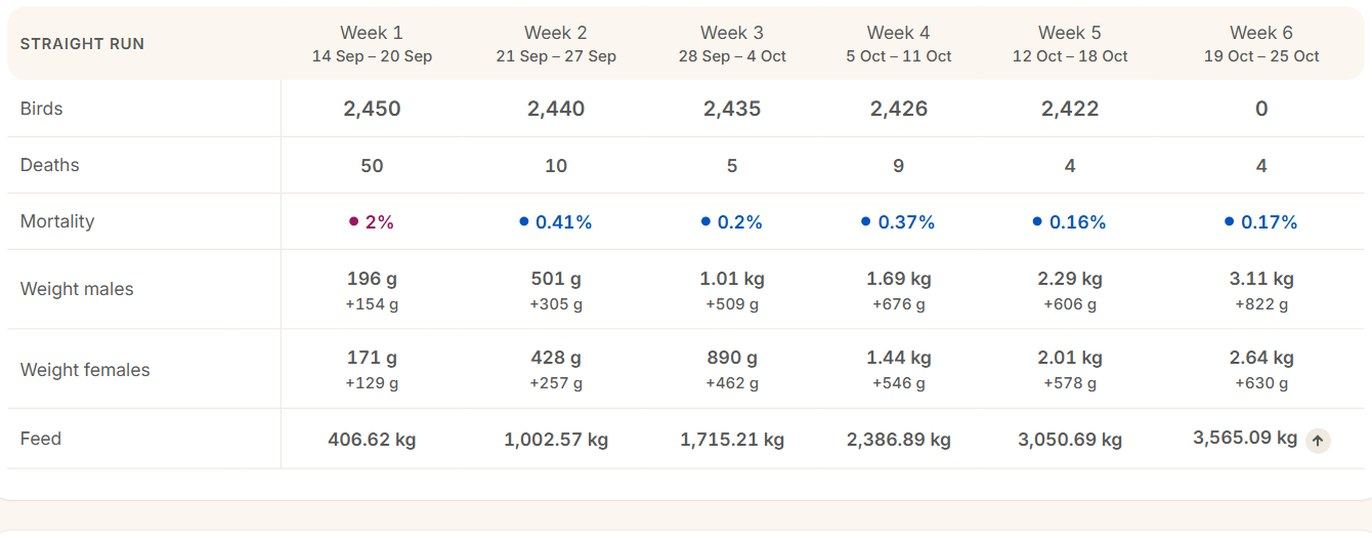
Broilers: as your birds move from starter to grower to finisher, each feed is costed at its own price, and you see feed conversion, deaths and cost per bird before you agree a price with a buyer.
Feed phases and run-out warnings
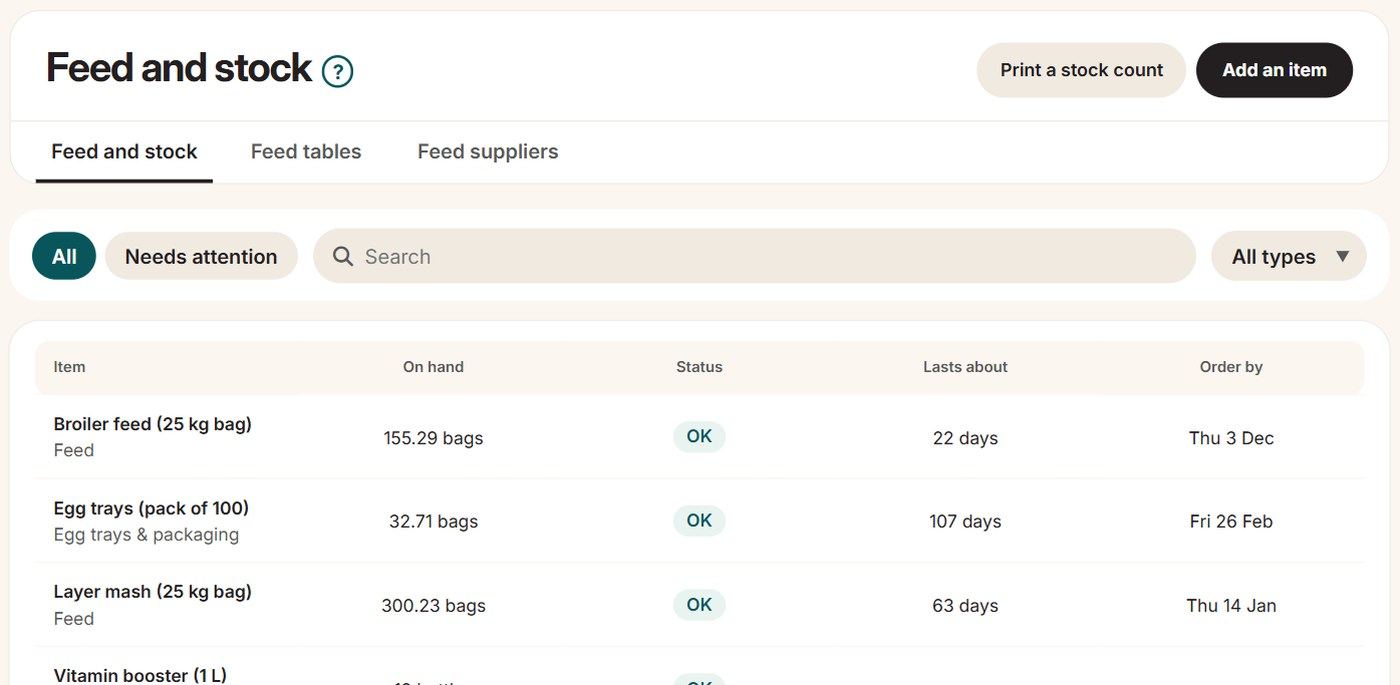
Set your own feed tables with phases (starter, grower, finisher, layer), each with its own price per kilo. Chicken Budget works out how long each feed in your store will last and tells you the day to order more.
Vaccinations, medicine and sell-by dates
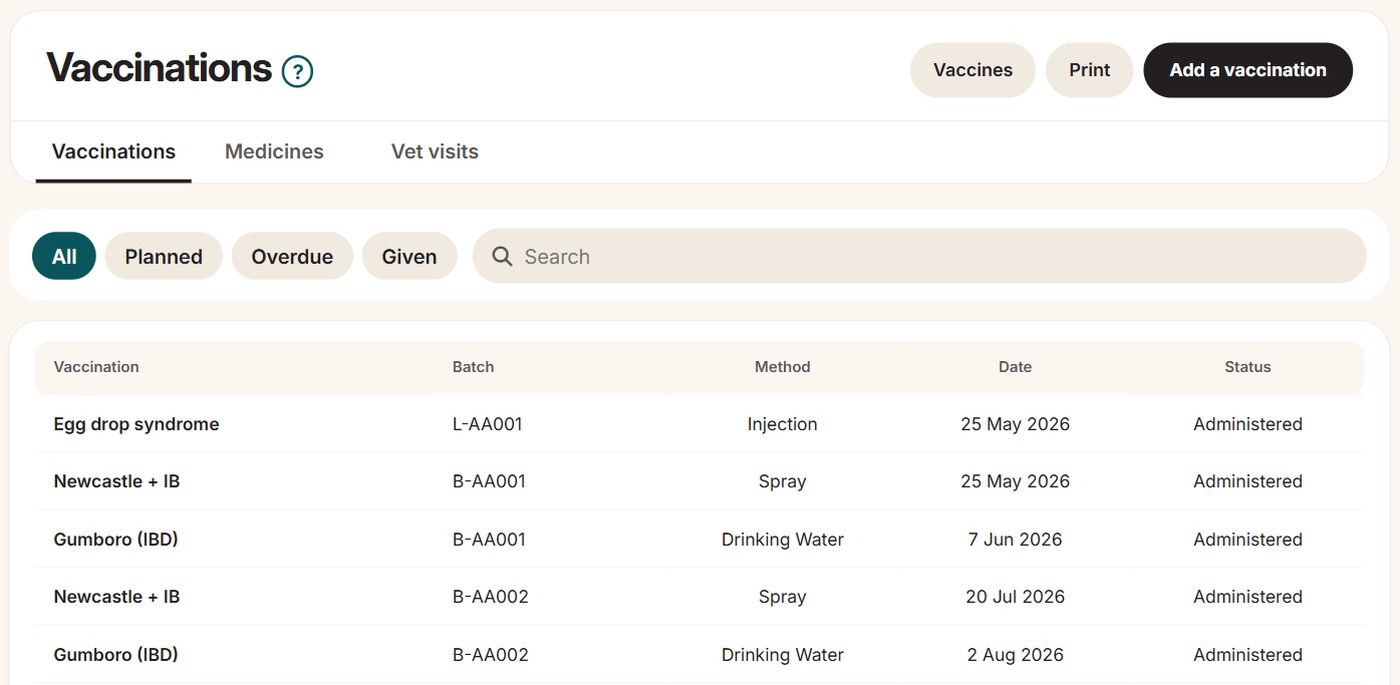
Plan every vaccine from day one, record vet visits and medicines, and see the date the birds may be sold after a treatment. Rising deaths, low feed and medicine close to its expiry date show up as alerts, on screen or in one short daily email.
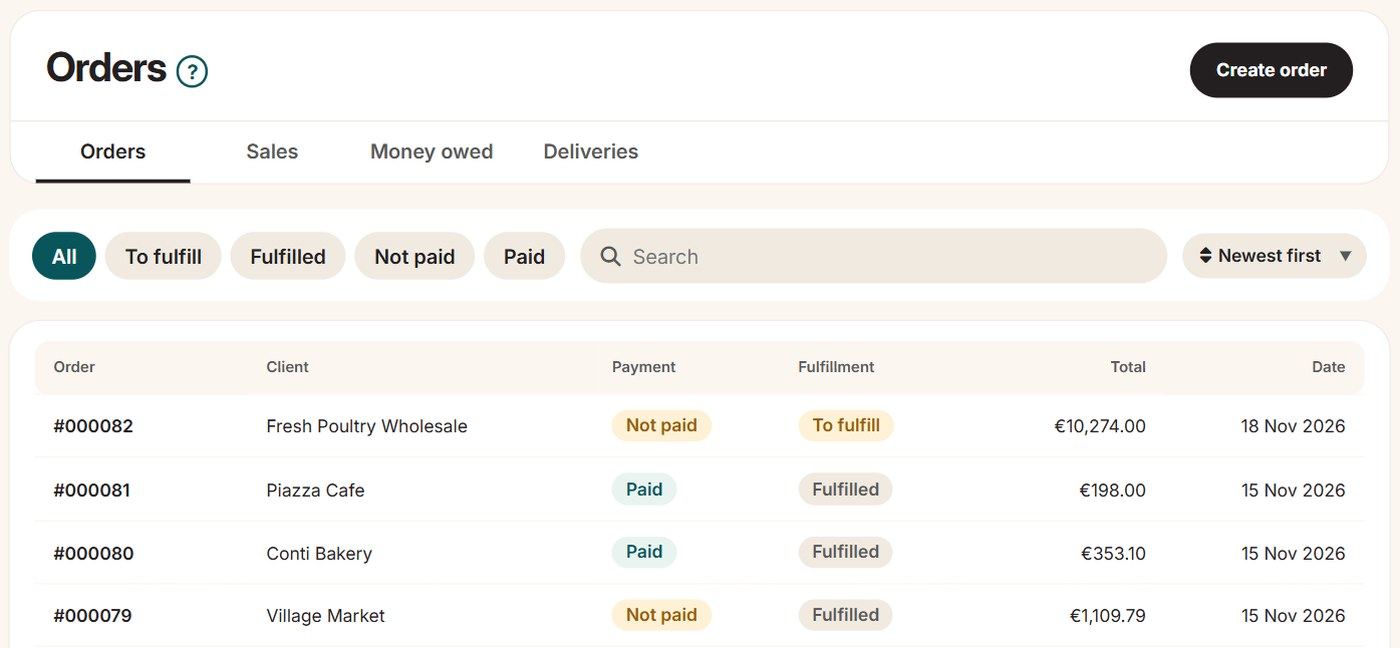
Sales, booked orders, invoices and follow-ups
Built right into your farm records.
Farm example: book an order weeks before the birds are ready. It shows as booked on the batch, so nobody sells the same birds twice, and it counts as a sale on its delivery day. Email clean invoices, mark orders delivered and paid, see who owes you money, who your best customers are, and who is due a follow-up before they buy somewhere else.
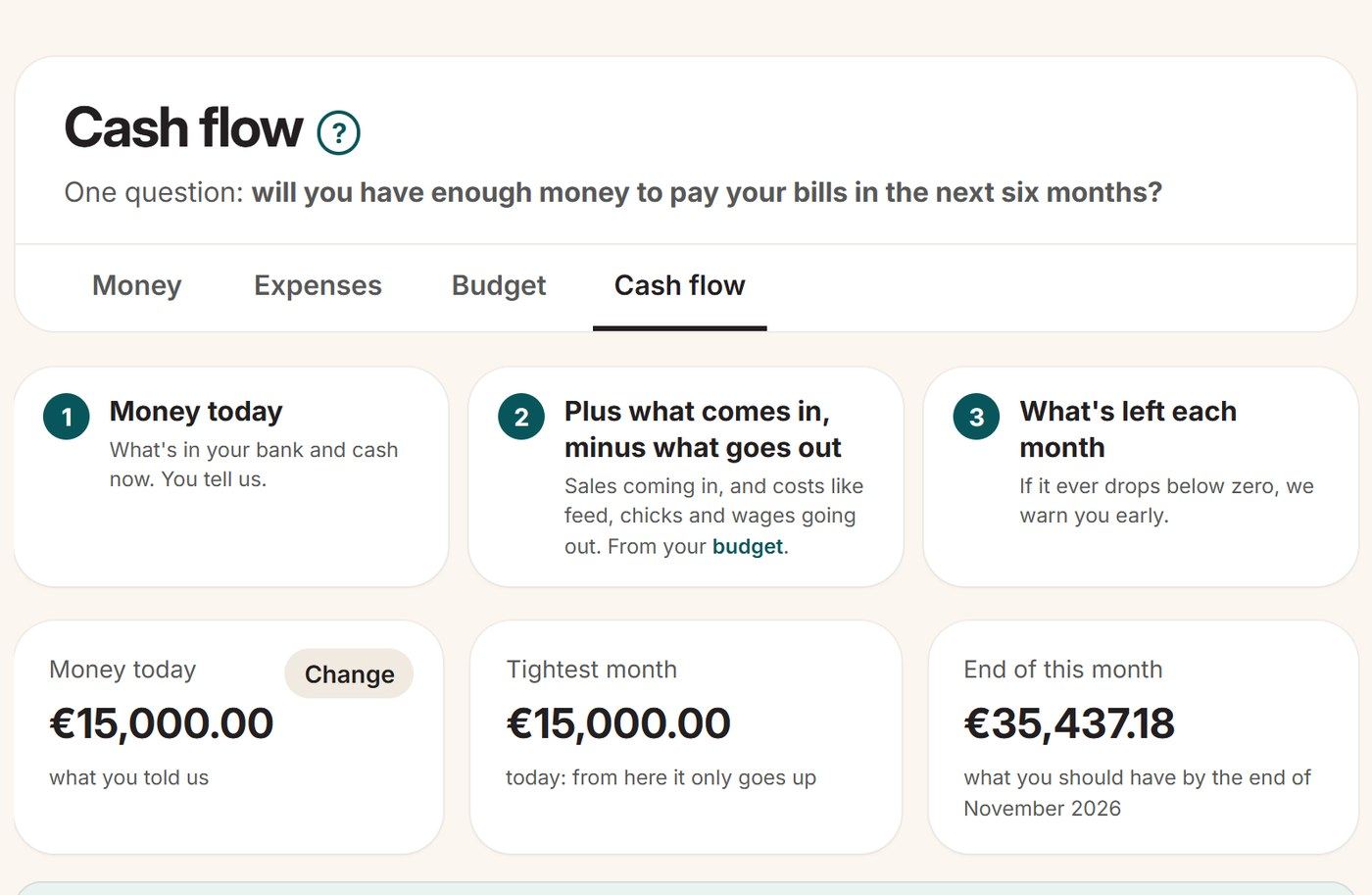
Budget and six-month cash flow
Before you take a loan, build a shed or order more chicks, set a budget and see what should come in and go out over the next six months.
Staff hours, rota and payslips
Keep a small crew organised: hours, a weekly rota and payslips, with pay added to your costs.
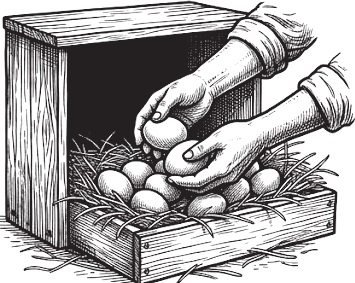
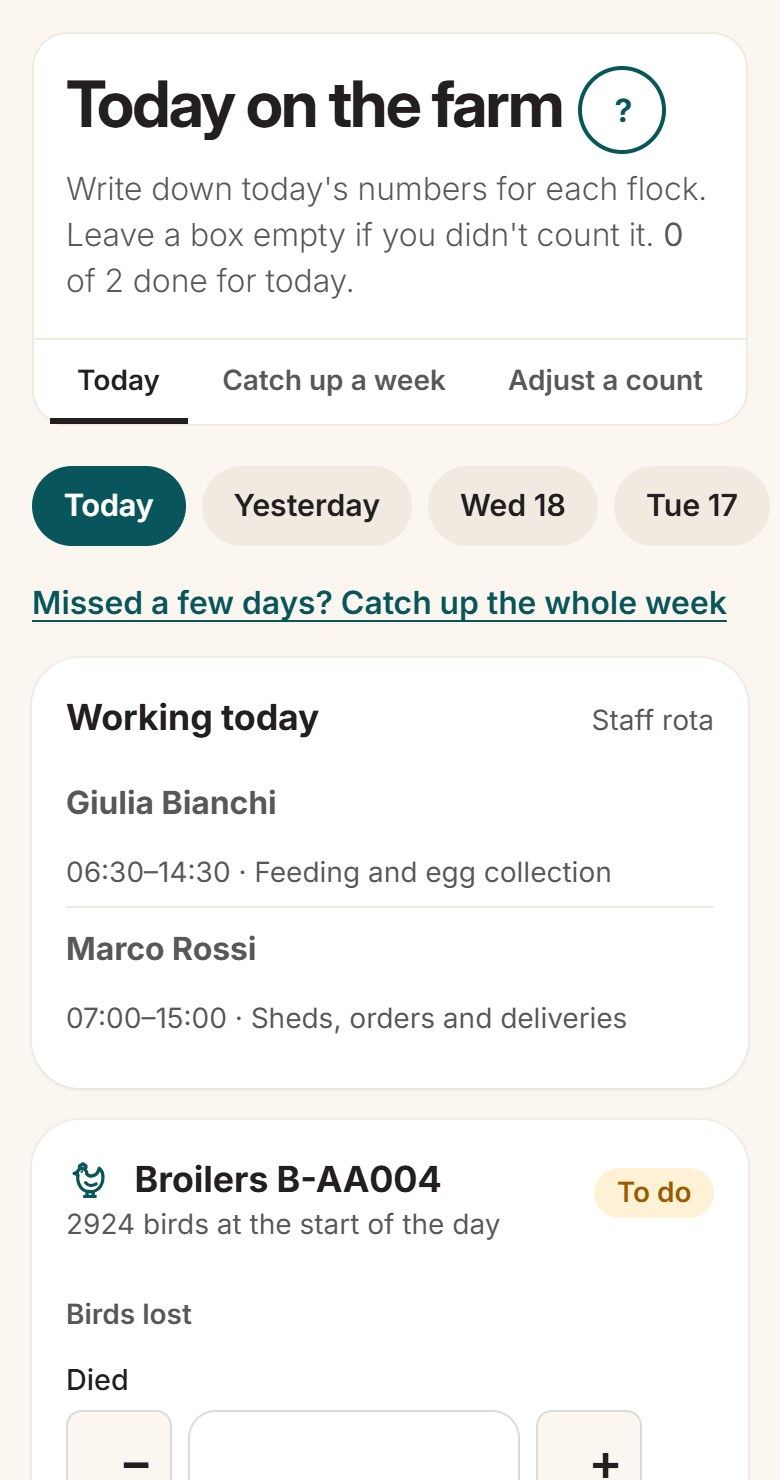
The 30-second shed screen
Farm example: your shed has thick walls and no phone signal. You tap in today's dead birds, feed, water and eggs by size. The phone keeps the numbers safe and sends them when you walk back to the house. Prefer a pen? Print a weekly shed sheet and type it in later.